By Maggie Meegan | Reporter
In an attempt to prevent history from repeating itself, the Texas Collection makes a conscious effort to preserve and tell history.
Baylor’s Keston Collection is home to the largest artificially assembled collection of materials about religious persecution under communism and other totalitarian regimes.
Larisa Seago, curator of the collection since 2007, has worked with the Keston archives since it moved across the Atlantic from Oxford, England, to settle at Baylor.
“There is a personal story behind each item in this collection,” Seago said. “It doesn’t matter if you don’t speak the language. You go to the file, and you can find a lot of information that you can actually read.”
Kathy Hillman, the director of The Keston Center for Religion, Politics and Society, has held the role since 2012.
“The collection encompasses about 33 different languages and at least 30 discrete religions and denominations,” Hillman said.
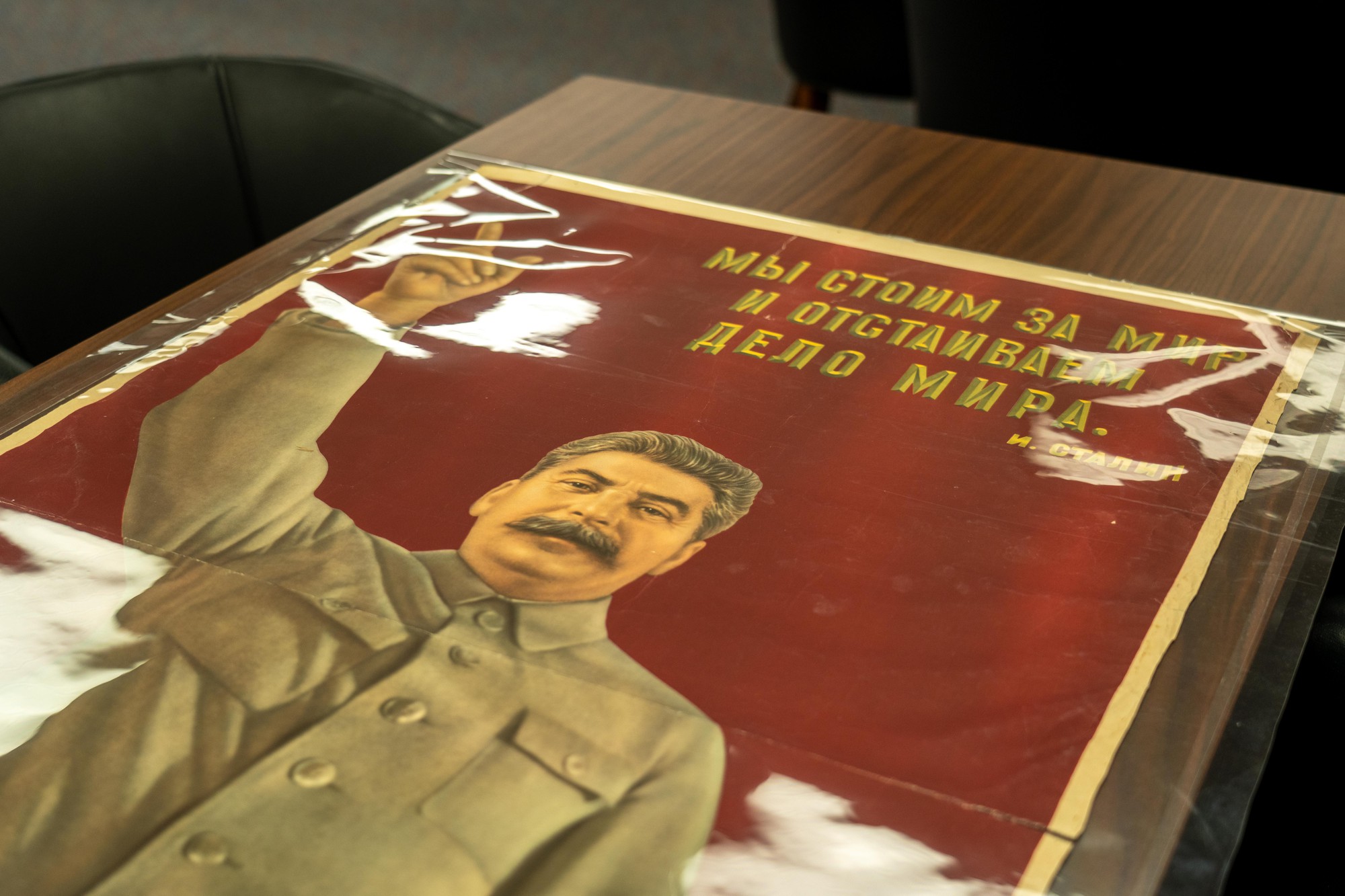
Included in the archives are trial transcripts, handwritten letters, posters, art and much more. These artifacts are called “samizdat,” meaning they were illegally published and smuggled into another country.
“We actually don’t know how they smuggled most of the materials, because we have Council for Religious Affairs records here and KGB materials that were copied,” Seago said.
The creation of the Keston Collection was started by a man named the Rev. Michael Bordeaux, who was a part of the very first cohort of British student exchange at Moscow University.
“While he was there, he witnessed the beginning of the Khrushchev anti-religious campaign,” Hillman said. “He decided that his call was to be the voice of the voiceless for those who could not speak for themselves. And so in 1969 he, along with some others, founded what became The Keston College, also known as the Keston Institute.”
At Keston’s current home inside Carroll Science Library, Baylor students and researchers are learning about history and finding connections to the people documented in the artifacts.
“We’ve had a number of visitors who have found things from their families,” Hillman said. “One in particular found a news service, and in the list of prisoners [was] his father, who had actually been imprisoned.”
Researchers add and explore primary documents as well as translate and connect propaganda and artifacts to what is known of history across different countries.
“This is a unique collection, and I actually enjoy working with it because you never know what you will find next,” Seago said.