By Stephanie Starks | Staff Writer
Baylor students rolled up their sleeves this week as a blood drive hosted by Health Services and Carter BloodCare filled every available appointment, continuing an effort that has collected 900 units of blood from the Baylor community over the past two years.
Carter BloodCare, a nonprofit blood center, partners with Baylor Health Services to collect blood that can be supplied to hospitals for patients who need transfusions, including those undergoing surgery or receiving trauma care. The blood drive took place Monday through Thursday outside Moody Library on 3rd Street.
Because hospitals cannot manufacture blood, they depend on donations to maintain their supply. A single blood donation can potentially help multiple patients because donated blood can be separated into components such as red blood cells, platelets and plasma.
According to the New York Blood Center, one pint of blood can save three lives. Participating in a blood drive is a way to contribute back to the health of the people who live near us.
Dr. Burritt Hess, medical director for Baylor Health Services, said the blood drive provides students with a practical way to serve the surrounding community.
“As a Christian institution, we’re focused on loving God and loving our neighbors well, and this is a very practical expression of loving your neighbor,” Hess said. “McLennan County historically has struggled to be able to maintain adequate blood supply in hospitals. The blood drives here at Baylor help to mitigate the lack of blood. This is a huge gift that Baylor gives to the Waco community.”
Before donating, students check in with a Carter BloodCare team member and undergo a screening process to determine whether they are eligible to donate.
“One of the Carter BloodCare team members does the cannulation of the vein in the arm, and every person donates a pint of blood,” Hess said.
Baylor Health Services’ outreach leadership helps organize the university’s blood drives. Uriah Yarbrough, outreach coordinator for Baylor Health Services, said the drives connect Baylor with the surrounding community.
“Baylor has such a strong fellowship,” Yarbrough said. “What the students and staff do for others is beautiful. What we see here is the Spirit of the Lord at work here. He branches out into the student body, from faculty and staff, and then into Waco. This encouraging image only comes together when we all bring our pieces together.”
Over the past two years, Baylor donors have contributed 900 units of blood, according to Yarbrough. Demand from donors was high enough this year that every available appointment was filled.
“This year’s blood drive is completely booked,” Yarbrough said. “God is really working through these blood drives.”
Yarbrough said he has seen firsthand how patients can depend on donated blood.
“I know of a student who had a condition where she had to get an infusion because she was low on blood flow,” Yarbrough said. “I do not know if it specifically came from the student body, but how incredible is it that Baylor can sustain itself while sustaining the surrounding area.”
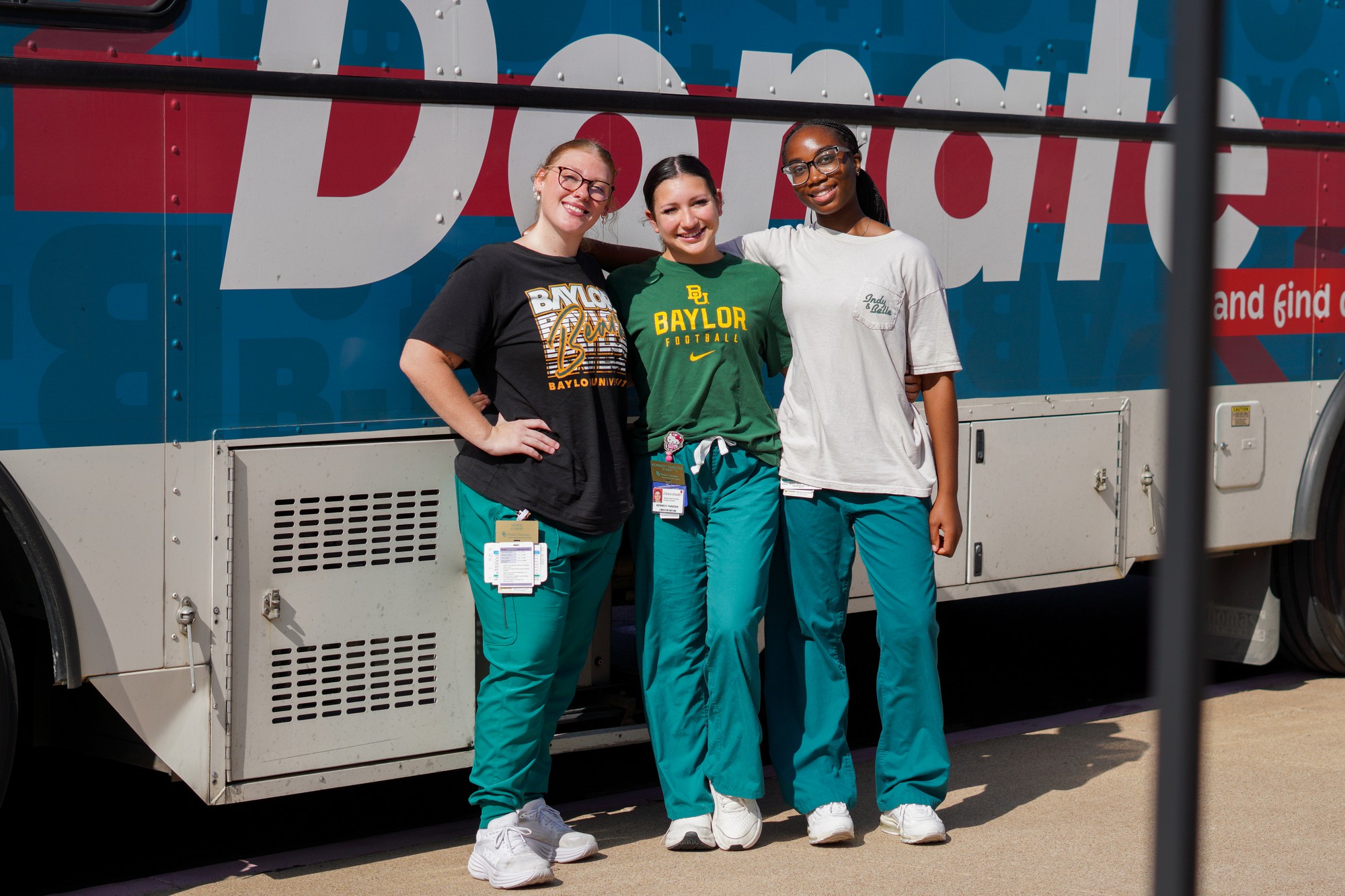
Wylie senior Kennedy Paredes, a nursing student, participated in the blood drive as part of her community outreach clinicals. Paredes said the demand was apparent throughout the drive.
“[Other nursing student and I] have had the opportunity to give back to Waco through our community outreach clinicals,” said Paredes. “I have enjoyed coming back to Baylor from the Dallas [nursing] campus to help out the Waco community where I completed my core curriculum. It was also encouraging to see so many people who wanted to give blood, but we had to turn them away because we had certain time slots that were all full.”
San Antonio senior Eseabasi Akai said he decided to participate as a way to help others.
“I think that giving blood is a good way to give back to the community,” Akai said. “It was one of the first times that I was able to do something like that for someone else on campus.”
Akai said students preparing to donate should take care of themselves beforehand to reduce the likelihood of feeling unwell during the process.
“Students need to prioritize sleep, proper nutrition, stay hydrated and try to relax their nerves. The process can be scary, but students should remember that they are doing it for a good cause, said Akai.