By Giselle Lee | Staff Writer
Christian womanhood has been mobilizing through consumer culture for over a century, whether it’s Hallmark movies, mommy blogs, romance novels, Hobby Lobby aisles or pastel-scripted wall art. However, New York Times bestselling historian Kristin Kobes Du Mez believes this trend of marketing Christianity as a brand only does more harm than good.
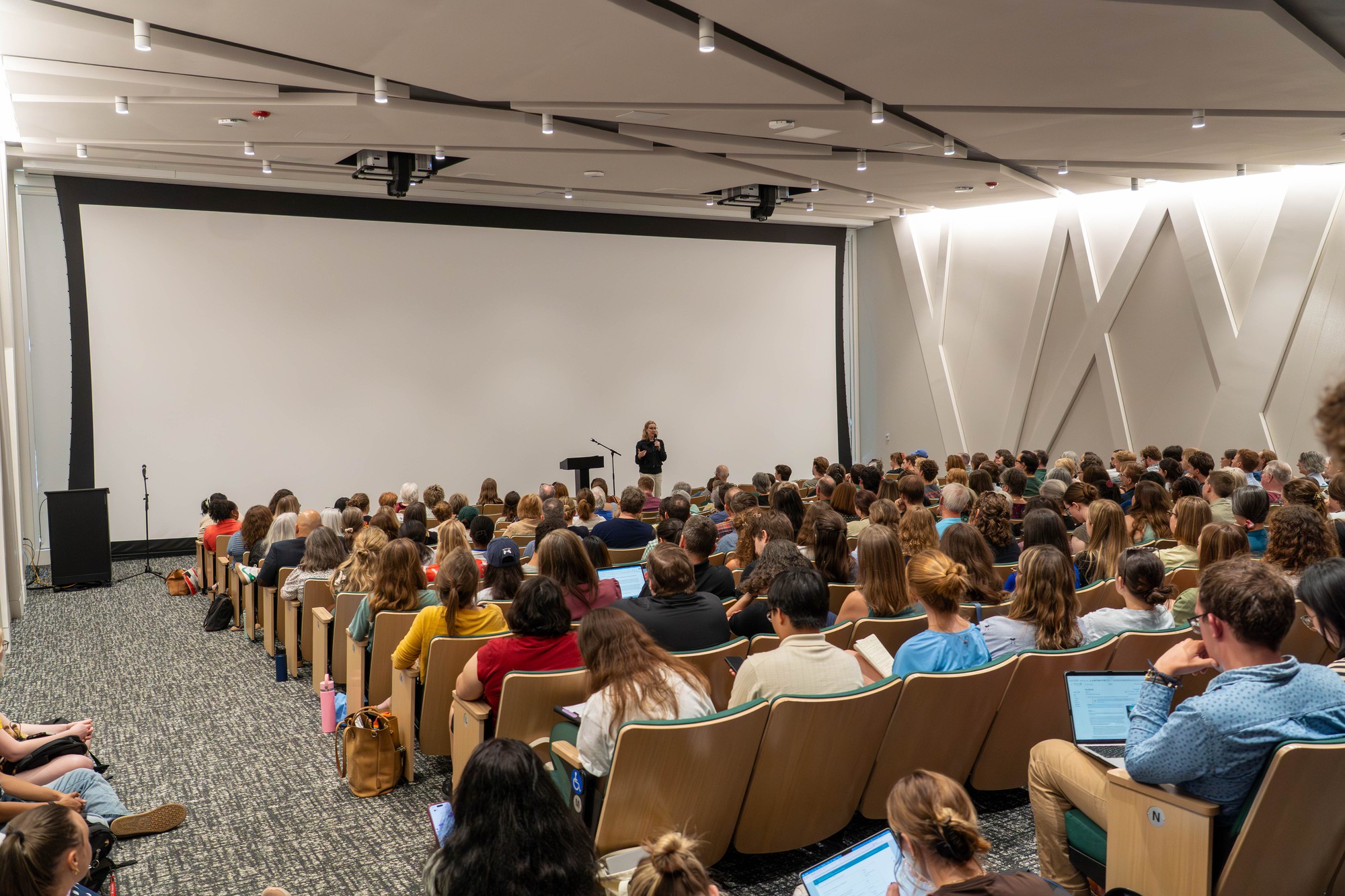
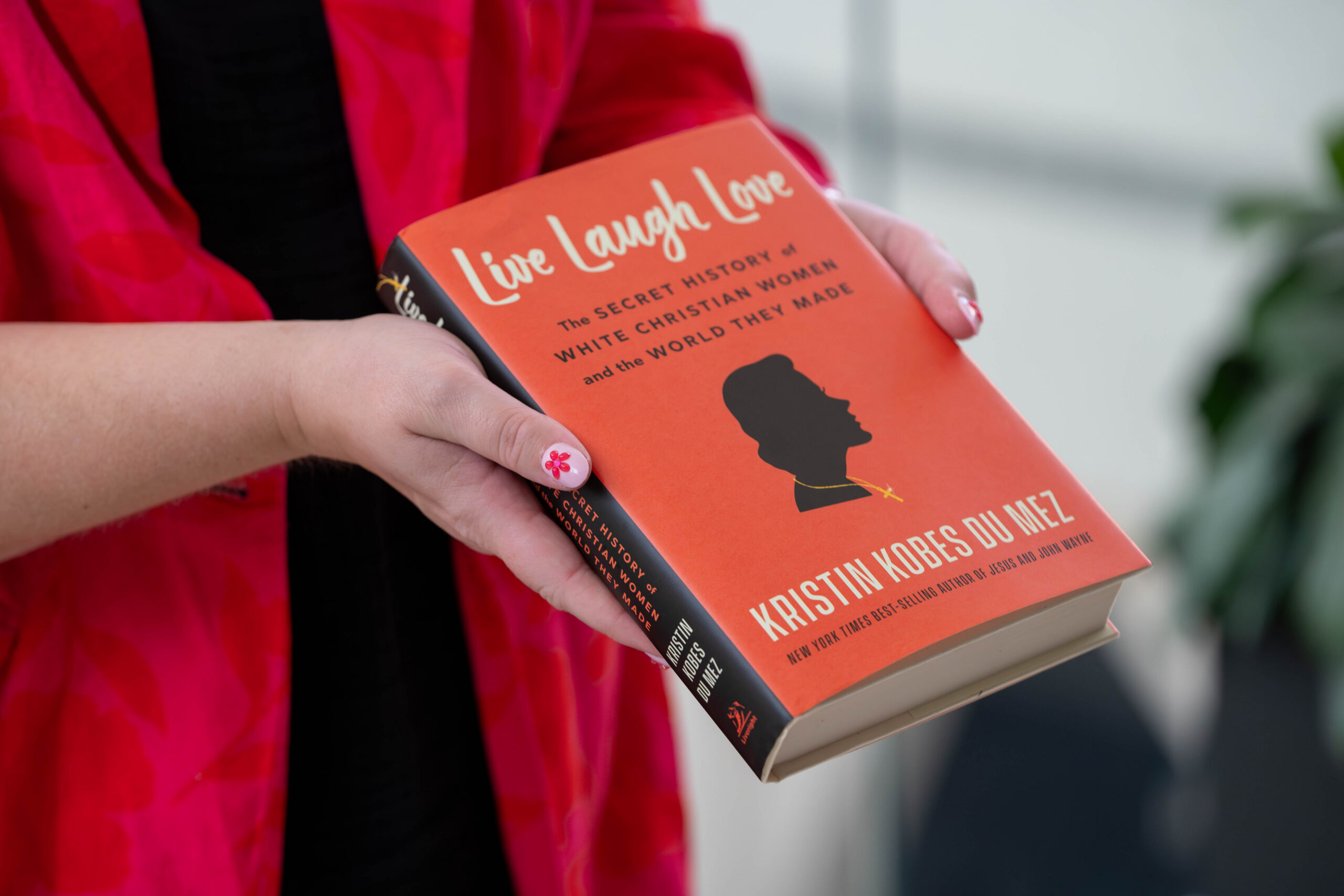
As the 2026 Vardaman Lecturer, Du Mez addressed a large audience on Monday at the Fudge Family Auditorium in the Hurd Welcome Center to speak on her new book, “Live Laugh Love: The Secret World of White Christian Women and the World They Made.” The book explores the theological exclusion of women in modern American Christianity and explains how religious innovators taught that positivity was the secret to spiritual and material success.
Following her rampant rise to success after her previous book, “Jesus and John Wayne,” became popular amongst evangelists after the January 6 incident, she said her inspiration came from attending a seminar on American evangelicalism, where all the men in the room stared at her “with blank faces” when she mentioned the shifting nature of religious authority in the Christian women’s blogosphere.
“I took that opportunity among esteemed colleagues, historians who devote their lives to studying Evangelicalism yet who didn’t know anything about this whole world, and said that demographically speaking, women are the center of American Christianity and of American Evangelicalism,” Du Mez said.
Du Mez said compiling research was more complicated than she initially expected as she encountered “so many surprises” throughout her research into purity culture, devotionals and women’s ministry, or “anything that had a pink cover or flowers on it in a Christian bookstore”.
“If you think about topics like multi-level marketing, influencer spaces, tradwives, you know this is a story that is bigger than just evangelicalism,” Du Mez said. “We need to talk about Mormonism and mainline Christianity and the secular philosophy of positive thinking, this idea of positivity that I trace back to the 19th century movement of New Thought, which evolves into the philosophy of positive thinking.”
Houston freshman Sophia Martinez said she was relieved to see a “modern movement” in understanding the layers of American Christianity, despite initial skepticism over Du Mez’s book title.
“As a woman who feels called to ministry or to work in a religious place, it’s encouraging to know it’s possible,” Martinez said. “As times are changing, people are really understanding what the Bible means and women’s roles in modern Christianity. I think it’s refreshing.”
Martinez said her takeaway was more than just an introduction to a new book, but the significance of women in Christianity as well.
“It raises a lot of questions and intrigue to look at things at a deeper, more theological or historical perspective instead of an easy answer,” Martinez said. “It’s also good to see the bravery in women researching and moving forward and identifying the corruption and actually talking about it and stepping out of that standard Christian woman role.”
Reverend Lizzie McNanus-Dale, who drove from Austin to attend the lecture, said she appreciated how Du Mez was willing to engage with theology as it is “lived in popular culture,” beyond theological or academic discourse.
“She takes seriously the material life of Christianity and takes seriously the life of everyday women,” McNanus-Dale said. “That tells often a bigger and more complex and intricate picture than we’re often taught in theological classes. I felt really inspired by the way she not only takes that seriously and has criticisms to offer, but also … She takes seriously about people who are so often overlooked by powers and principalities.”
McNanus-Dale said she was “heartened and reaffirmed” as there is more than a single story to be told about women in Christianity or women in Christian leadership.
“From any one denominational, cultural, historical view, there’s always a much more nuanced and complex picture, but that doesn’t mean that it’s not a story that we can’t tell,” McNanus-Dale said. “It feels empowering to see stories that have been sort of intimately and intricately interwoven into my own story.”