By Joana Karoshi | Staff Writer
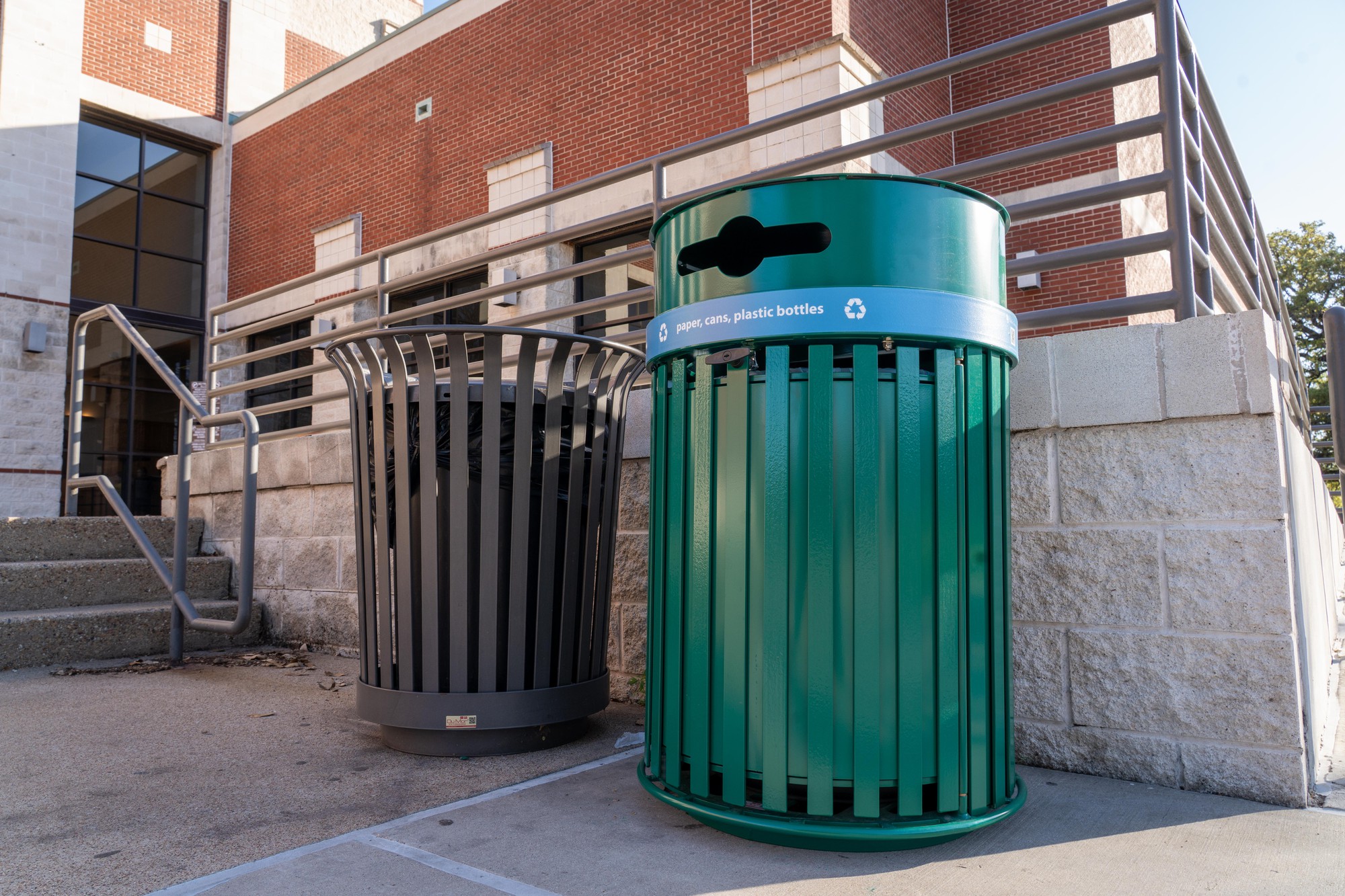
Outside residence halls and scattered across academic buildings, new recycling bins have appeared, encouraging students to adopt more sustainable habits.
According to Sustainability Specialist for Operations and Engagement Sarah Guberman VerPloeg, a growing university effort is actively addressing these concerns.
After a restructure in 2024, the Office of Sustainability sought to improve recycling on campus. To do so, they paired each outdoor trash bin with a recycling bin, allowing “equal opportunity” for waste disposal, Guberman VerPloeg said.
“These new waste stations began rolling out over spring break and are expected to be fully installed by the end of the semester,” Guberman VerPloeg said.
A standardized labeling system seeks to combat contamination and improve clarity of recycling guidelines. Additionally, the bins use different colored bags — black for trash and blue for recycling — to avoid contamination.
Guberman VerPloeg said that although outdoor stations have been improved, the team aims to improve indoor stations as well.
“Ultimately, the initiative aims to encourage responsible habits across campus, reinforcing the message that ‘Bears Care to Recycle Right,'” Guberman VerPloeg said.
As Baylor continues expanding its recycling infrastructure, student responses suggest that accessibility alone may not be enough. Increased awareness, clearer labeling and education on proper recycling practices may play a key role in determining whether the new bins lead to meaningful change on campus.
San Diego senior Michael Gerken said he had not noticed the new bins and admitted recycling is not always top of mind.
“When I can, I try to, but otherwise I don’t really pay much attention to that,” Gerken said.
Gerken said increasing visibility through promotion could help students engage more with recycling efforts.
“I think if they ran a simple ad campaign or some sort of promotion about it, saying they have new recycling methods or where these recycling methods are, people might pay more attention to them,” Gerken said.
Los Angeles senior Aidan Chiu also said he was unaware of the new bins and described his recycling habits as largely based on convenience.
“If I see it there and I have an empty water bottle, I’ll throw this over,” Chiu said. “But if I just want to get rid of it, I’ll just find some receptacle to put it in.”
Chiu said he has not seen Baylor actively promote recycling initiatives during his time on campus. However, he believes increasing the number of bins might influence student behavior.
“If you lay more recycling cans everywhere, I think it’s human nature to want to go because you’re doing something good,” Chiu said. “It gives people more incentives.”
Fort Worth senior Rylee Robertson said she has noticed the bins, particularly in dormitories, but raised concerns about a lack of clear instructions.
“There’s no big description on what you can and cannot recycle,” Robertson said. “I do not know as a student if it’s actually going to a recycling facility.”
Robertson said this uncertainty affects how students use the bins and whether they trust the system. Robertson sees people put trash in recycling bins, so she’s unsure whether what goes into them is actually recycled. She stresses the need for clearer communication and education regarding recycling.
“I think it would be great to have even a talk about recycling and what Baylor aims for,” Robertson said. “A lot of people get confused — like with a pizza box. People think it can be recycled, but it can’t because of the grease.”