By Rhea Choudhary | Staff Writer
Baylor student government leaders opened up the floor to students and faculty Tuesday evening to understand how nearly half a million dollars are requested, debated and approved during “Navigating the SGAF: Senate Town Hall.”
Hosted by the student senate, the event walked the audience through the overall structure of student government, the Student Government Allocation Fund process and explained recent campus improvement projects funded by the body. The meeting also included an open Q&A and time for feedback from student organization leaders.
The SGAF distributes roughly $500,000 in university operational dollars each semester to support events, campus improvements and student initiatives. Funds are awarded on a merit basis to eligible student organizations, according to DeRidder, La., junior and Senate Internal Vice President Ashlyn Graves.
“We have that money to then give to students and specifically to student orgs,” Graves said. “And so if you’re here from a student org, that’s why we want you to be here. We want to give you information on this so that you can get the free money.”
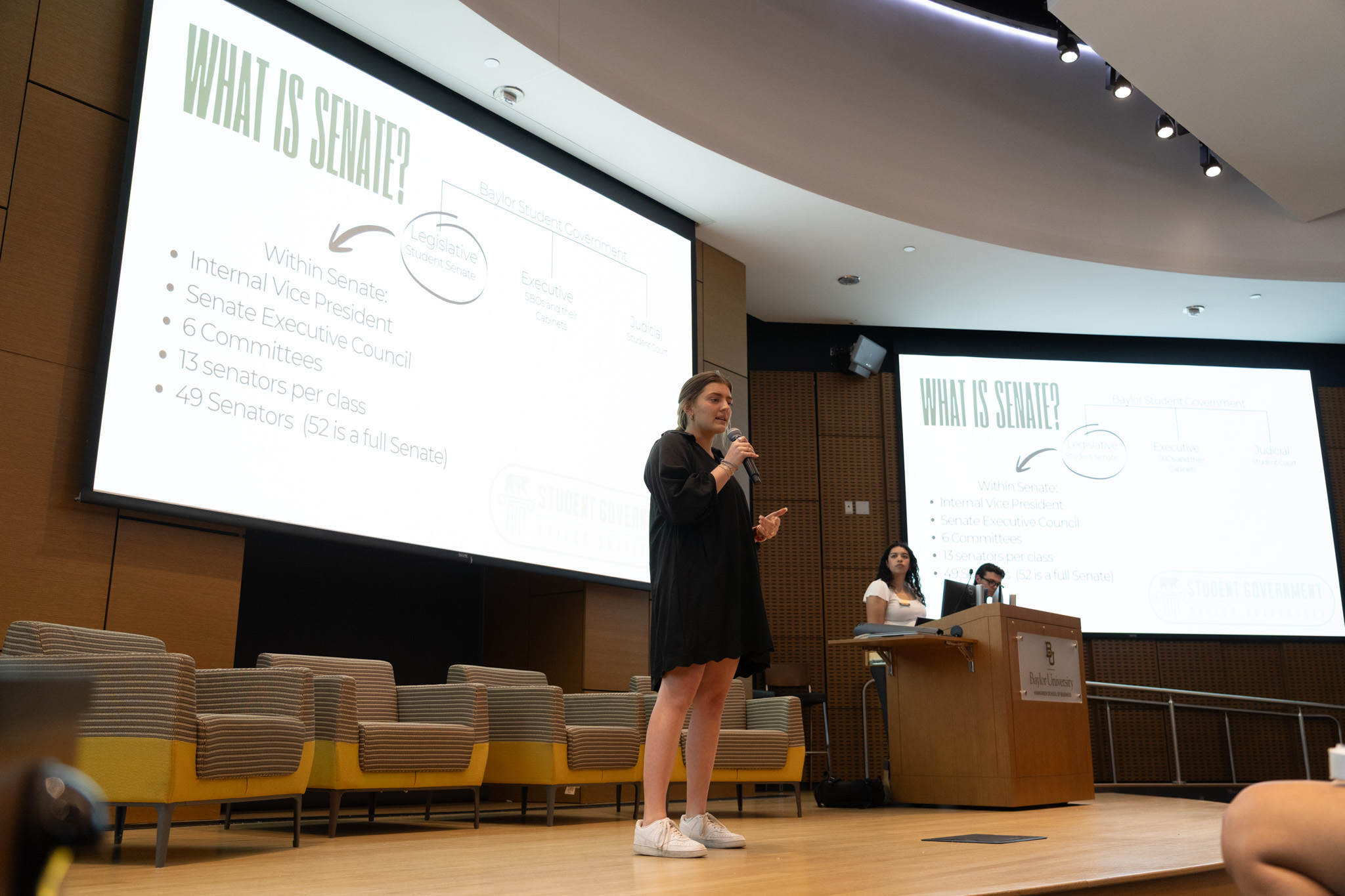
Graves began the meeting by outlining the structure of student government’s legislative branch. The student senate comprises 13 senators per class, from freshmen through seniors, for a total of 52 seats. Three vacancies currently leave the body with 49 active senators.

Within the senate are six committees: Diversity, Equity and Inclusion; Public Relations; Academic Affairs; Campus Improvements and Affairs; Finance; and Operations and Procedure. The Senate Executive Council, comprising committee chairs and legislative leadership, oversees internal operations.
Beyond passing funding bills, Graves said senators serve as a way to connect students with university administration.
“Mainly, we get to serve as kind of the in-between between students and administration,” Graves said. “Whether you realize it or not, we actually are representing you on a daily basis, and it does influence decisions that are made that pertain to you.”
In addition to allocations, the student senate passes resolutions, formal statements requesting action or affirming campus initiatives. They also pass Senate Supports, which function as official thank-you’s or condolences for faculty and staff.
Plainview senior and Diversity, Equity and Inclusion Committee Chair Mason Gregory explained to the audience what he called a simplified version of the SGAF process.
The process begins when an organization submits an online allocation request through Connect. The internal vice president assigns two senators to the bill who meet with the organization to draft a budget and write legislation.
Once finalized, the bill appears before the senate for a first reading, which is a procedural notice that the legislation is forthcoming, before heading to the Finance Committee for review. If approved there, it moves to a second reading, where the full senate debates and votes.
“Second reading is when all 52 senators, if we have a full senate, vote on your legislation,” Gregory said. “Other senators will be able to ask questions, and these questions help inform the voting process for the senators.”
After a period of pro-and-con debate, the senate votes. If the bill passes, funds are disbursed, and organizations must submit receipts to verify spending. Gregory stated that from submission to final vote, the process can take anywhere from three to eight weeks, depending on the size and complexity of the request.
“If you want to apply for funding for your organization, I would say at a minimum, start requesting funding at least six to eight weeks in advance,” Gregory said.
Several senate leaders described recent projects funded through SGAF, including annual student organization events such as Christmas on 5th Street, Gateway to India and Autumn Moon, as well as current capital improvements like SUB renovations, Sid Richardson lobby updates and an incoming cycling studio in the SLC.
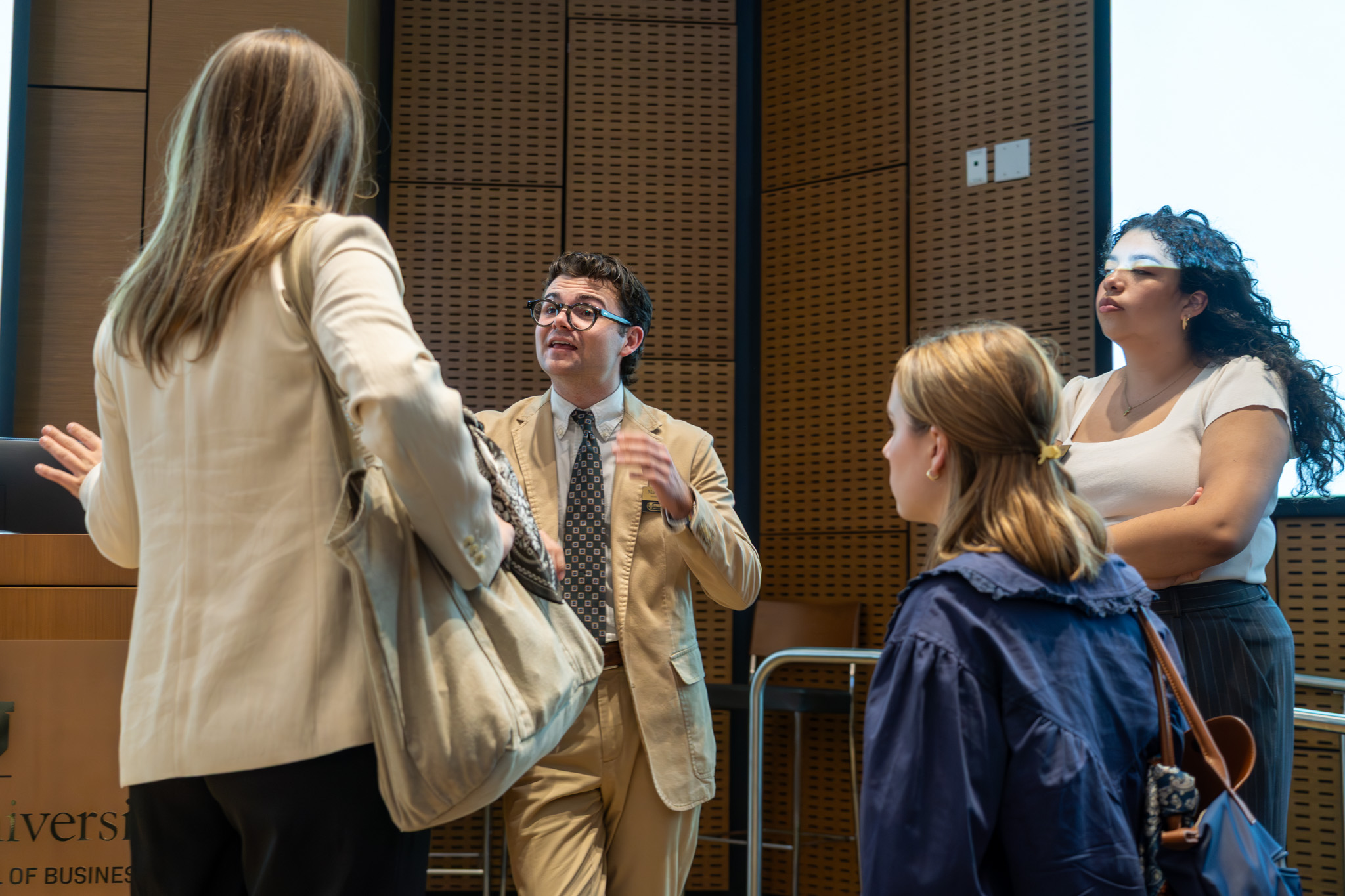
San Diego, Calif., freshman and Senator Noah Seroter explained that his projects have included fixing the unreliable Wi-Fi in Moody Memorial Library and renovations to the SUB. Seroter said the senators have met with Information Technology Services over the past month to address the spotty Wi-Fi issue, which is a recent initiative directly addressing many students’ complaints.
“We know that this is a really big problem for students getting Wi-Fi access within the library,” Seroter said. “So we took initiative to figure out what the issue was.”
The senate ultimately passed a $20,000 allocation to install 20 additional Wi-Fi access points in Moody, increasing the building’s total by roughly one-third.
“It’s really important for us, almost equally as important in establishing those harder relationships with higher up regular as it is actually asking to build more access points,” Seroter said.
Other senate improvements have consisted of funding new furniture and study spaces in the SUB and allocating $60,000 for renovations to the Sid Richardson lobby, including additional seating and a food locker to expand access beyond regular store hours.
Student leaders also talked about broader legislative efforts, including the Access Act, which will provide free rides on the Waco Transit System for students with a valid Baylor ID, and the Be Civil Act, which established a campus-wide civil discourse week focused on promoting healthy disagreement.
Additionally, the R.I.S.E. Act, which stands for reflecting cultural diversity, inspiring leadership growth, strengthening community relations and ensuring lasting impact, offers up to $500 per semester to multicultural organizations with reduced funding limitations, allowing for expenses such as general meeting food, cooking classes and T-shirts.
As the town hall meeting came to an end, senators encouraged students to utilize the SGAF and to reach out with any project ideas or feedback.
“We love any feedback because we want these resources to be directly helpful to you,” Graves said.
With $500,000 in the student government leaders’ hands each semester, the senators clearly outlined the process, but the door remains open to new, impactful initiatives and projects.