By Giselle Lee | Staff Writer
Ghana gained political independence from the U.K. on March 6, 1957, becoming the first African colony to gain independence. However, to achieve true freedom, a greater fight lay ahead for Ghanaians.
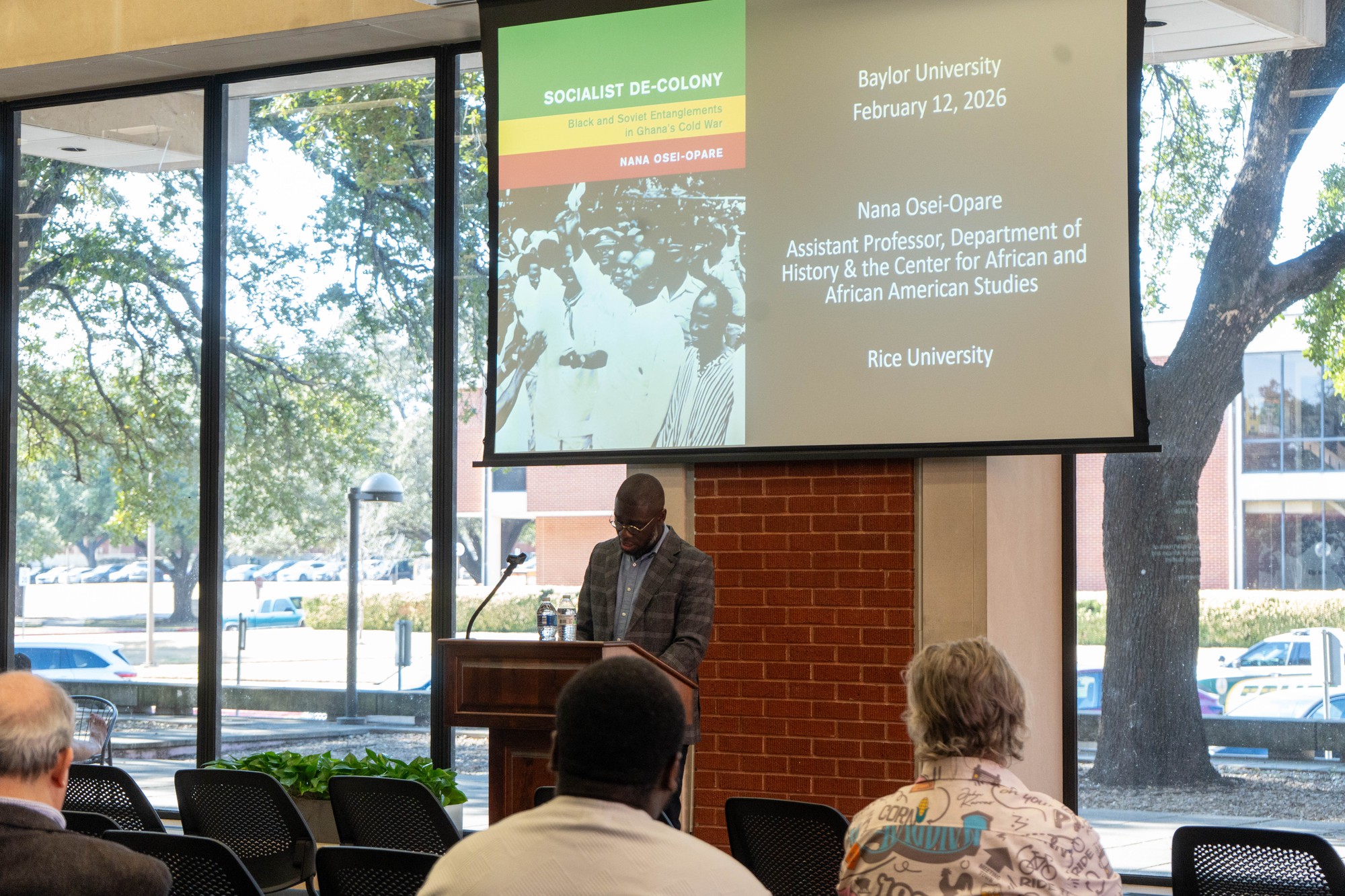
This was the story Dr. Nana Osei-Opare outlined in his first book “Socialist De-Colony,” which looked at Ghana’s development into a socialist state, the attitudes of colonialism that persisted years after its independence and Ghanaian students’ fight against discrimination.
Osei-Opare, an assistant professor of history at Rice University, presented his findings in a lecture titled “Black and Soviet Entanglements in Ghana’s Cold War” on Thursday afternoon in Moody Memorial Library. The lecture was one of many installments in the Black History Month series.
“The Black figures that are mentioned in this book, that make the book what it is, never took freedom for granted,” Osei-Opare said. “It was a constant struggle. They operated continuously within an access of tension and fear.”
Osei-Opare received numerous grants to travel to Russia, Ghana, the U.K. and throughout the U.S. to comb through archives that documented the truths of Ghana’s past. He explained how the source of Ghanaians’ fear was never fixed, and said their constant vigilance caused them to exist in paralysis of “new targets.”
“At times, it was a west versus international order; at other times, it was the Ghanaian state itself — sexism, ethnic externalism; in other times, it was local and foreign companies and capital,” Osei-Opare said. “The Black figures in the story understood that political independence was not political freedom, but a point along the treacherous and new road.”
Throughout his lecture, Osei-Opare emphasized how the battle against socialism was uphill and included years of international struggle with the Soviet Union, notably through the mysterious death of a Ghanaian medical student in 1963. Students from Ghana protested facing suppression, racial remarks and physical violence, according to a Ghana Remembers article.
Despite the obstacles, Osei-Opare said students were crucial in shaping Ghana’s politics at the national and global levels.
“You have power in your agency,” Osei-Opare said. “So we come together and protest for things you care about, and you can force your government to change things.”
Albany, N.Y., freshman Georgina Asante, of Ghanaian descent, said Osei-Opare helped her learn more about her own culture’s history.
“Dr. Osei-Opare dispelled the myth of Nkrumah [former president of Ghana] being a communist, and it just shows me that Ghana in the 60s was not close-minded, but wrongfully portrayed as anti-capitalist,” Asante said.
Asante said the lecture motivated her to delve deeper into African history because it is often portrayed in a negative light.
“History is written by the winner, which are oftentimes Western powers or Europeans, and that can negatively skew history and what’s taught,” Asante said. “By doing a deeper dive, you can get to know more about the authentic history and the truth.”
Osei-Opare encouraged students to believe that their voices matter. He said that those with the power to change things might agree with them or face repercussions, much like the people in his book.
“Ultimately, what they did, what they went through, used to convince people,” Osei-Opare said. “Maybe you might not convince your current generation, but through time, the ones after you. Just share your convictions and write to people, your representatives. Has your voice been seen and circulated, and it will go global.”
Baylor will host lectures, events and celebrations in honor of Black History Month. A full list of events can be found on the Multicultural Affairs website.