By O’Connor Daniel | Reporter
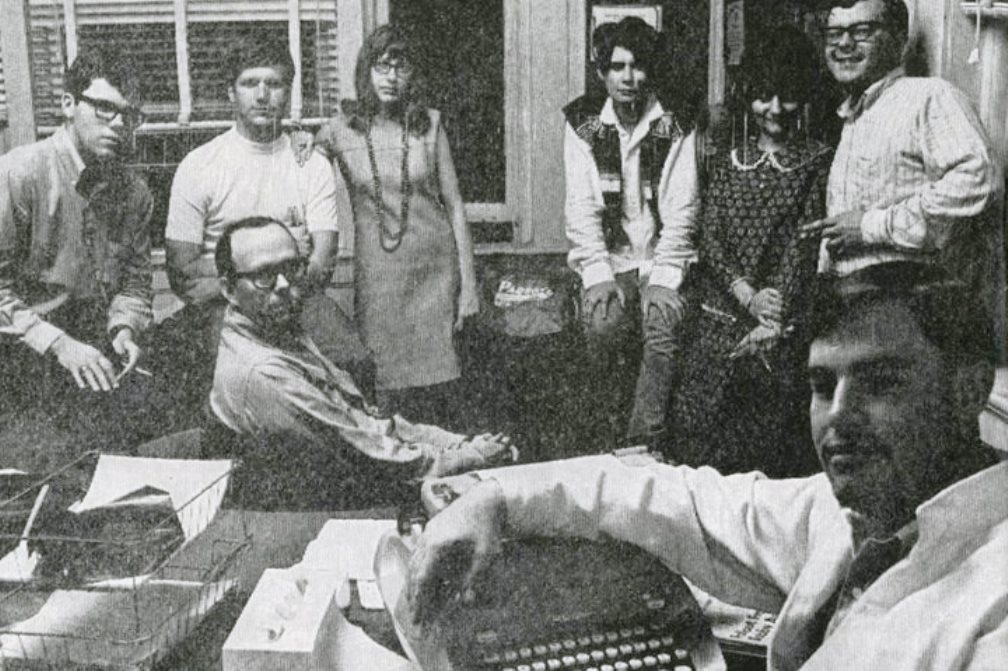
Long before Preston Kirk (’68) covered Apollo missions or the great heavyweight champion Muhammad Ali’s trial, he was meeting deadlines on a hundred-year-old flatbed press in the back of Baylor’s barracks building.
Kirk joined The Baylor Lariat on Feb. 1, 1967 — his birthday — just one year before graduating. As The Lariat celebrates its 125th anniversary on Friday, Kirk reminisced on a radically different newsroom — a wooden, military-style structure behind Old Main, perched over Waco Creek.
“There were linotype operators, that’s hot metal,” he said. “So every story, every letter had to be set in a tray backwards and then printed. We might start at 8, 9, 10 o’clock at night to start getting that paper out. We’d have to print most of the night to get 3,000 copies … then they would get folded and sent out to the dorms and the Student Union Building.”
Kirk said he didn’t arrive at Baylor planning to be a journalist.
“I wanted to be a drama major,” he said. “So my major is drama [and] English and in my junior year, the professor at Baylor — he was a big man — put his arm around me and said, ‘Preston, you don’t really belong on the stage. You need to go back to the testing center and determine what your real aptitude is.’”
Kirk said he was crushed. Up until then, he was under the impression that he was a thriving actor, having won several awards and secured an entertainer role at Six Flags one summer.
When his test results came back, the recommendation was clear: he should be a pediatrician, a preacher or “something to do with writing.”
“I chose the third option because I had been a high school newspaper editor for two years,” Kirk said. “I had done the literary magazine. I had written for my local newspaper in town, The Bellmead News. So I thought this would work.”
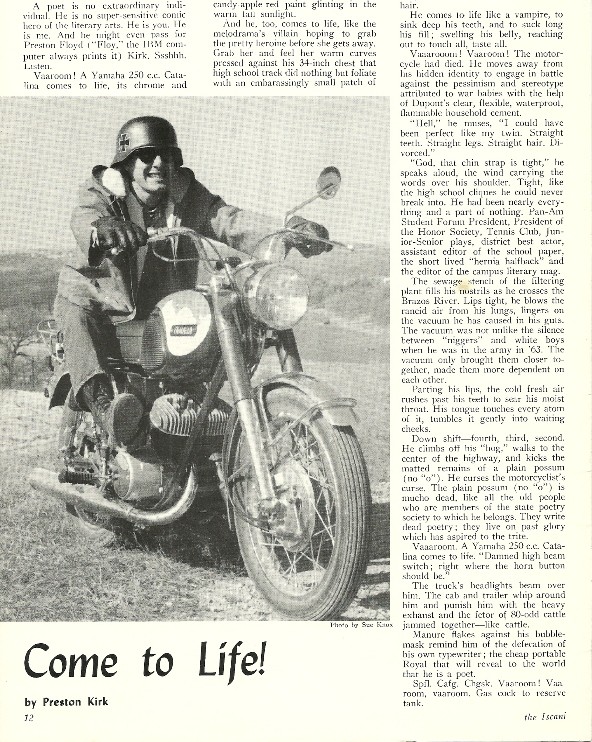
A little over a year later, he became a journalist for The Lariat. Kirk poured himself into the work. He covered sports, profiled campus characters and wrote long-form features for the weekend supplement. One article documented a tragic hazing death. Another piece collected student opinions about Baylor football — shortly before fans burned the head coach in effigy behind the SUB.
“I was proud of every little snippet I could get in The Lariat,” he said, flipping through a thick, yellowed scrapbook of his old clippings — his “cutbook.”

He said he still remembers the Baylor Barracudas, the university’s short-lived synchronized swimming team, and the stories that never made it to print.
Kirk’s classmates also knew him for his motorcycle.
“I rode a motorcycle around campus,” he said. “The professor, David McHam, would always say while taking roll, ‘OK, I’m checking Preston Kirk, and I can hear his motorcycle. He’s coming.’”
Kirk said he wrote about helmet laws and campus bike safety.
“So write what you know,” he said.
Two weeks before graduation, Kirk became editor of the Waco Lodestar for $85 a week — his first job in journalism.
He went on to intern at The Galveston Daily News, then worked for United Press International in Houston, where he covered groundbreaking medical transplants, civil rights hearings, the trials of LSD guru Timothy Leary and the Apollo 8-14 space missions.
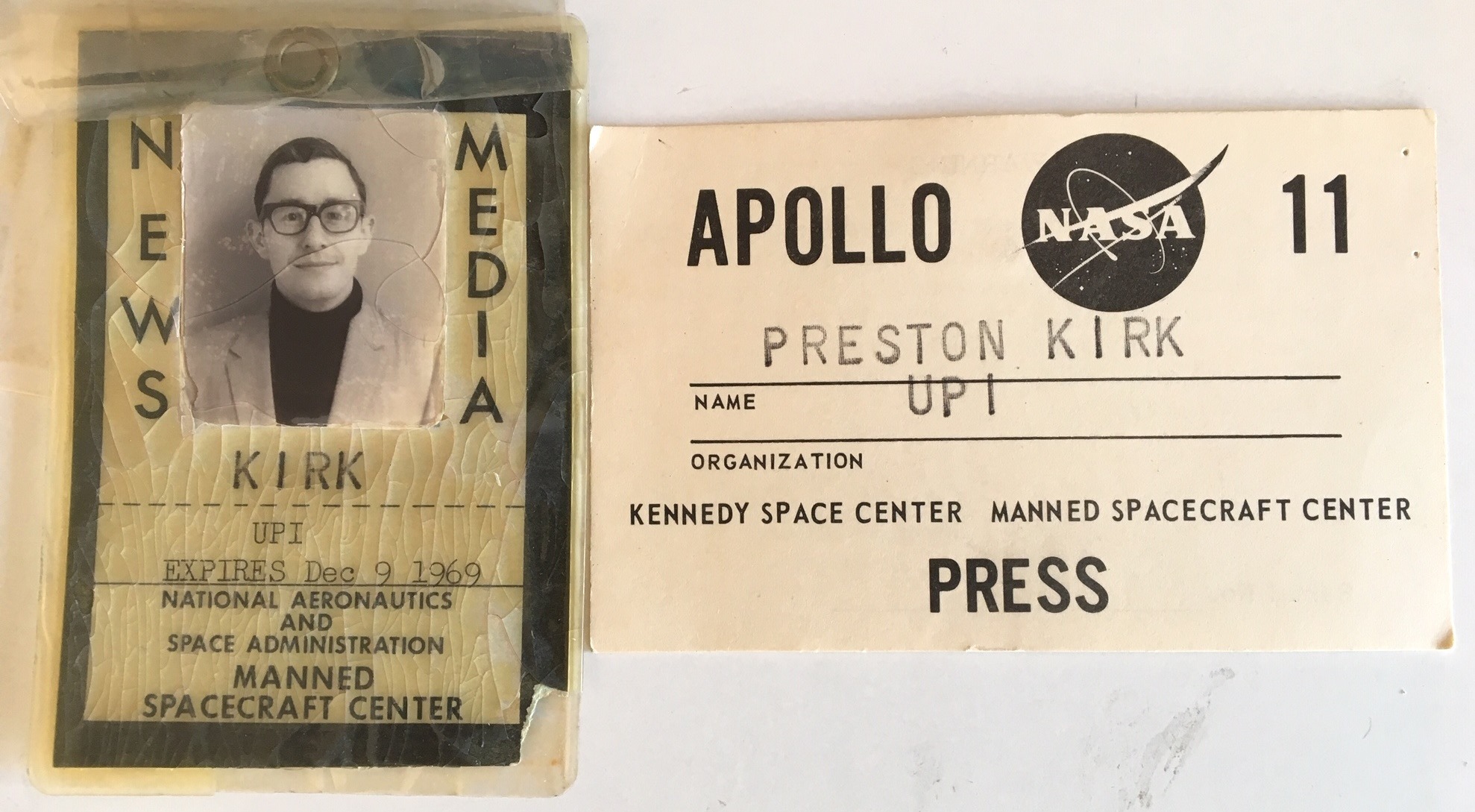
His work earned national recognition. His investigative reporting led to a state probe of fraudulent land deals. In 1973, the U.S. Small Business Administration recognized his coverage in the Congressional Record. He later founded his own PR firm and counseled CEOs through crises.
But the habits he developed at Baylor stayed with him.
Kirk said his best advice for student journalists is to remember the interview is not over until it’s really over.
“You say the interview is over and the subject will sometimes be more casual — because, oh, it’s over … and then you toss in just one little soft question that turns into a fine, usable answer,” he said. “So it’s not over until you’re not in the same space as your subject.”
He said the best interviews come from slowing down and paying attention.
“I would say when you go to interview a person, always — if you can — interview them where they are comfortable, because where they are comfortable will reveal so much,” Kirk said. “I would go in to interview people. I would know everything on their desk. I would make a note of it.
“Are they into sports? Are they showing their children’s pictures? Are there dead fish photos on the wall?” he continued. “Because then you can say, ‘Wow, that’s a great picture there. Are you a bass angler or do you like saltwater?’”

Kirk said the key to making people care about an interview is to show as a journalist that he cares about them and their interests.
“The first few questions, unless it’s an ambush interview, should be soft questions,” he said. “Put the person at comfort. Comment, ‘I appreciate you taking time from your family or your job.’ Find something personal to share with them. And always take a moment, just as we started, and introduce yourself.
“And don’t be afraid to pebble back and ask the same question three times if you’re not getting the answer you want,” he continued. “And if you have to close an interview by saying, ‘I don’t think you’ve answered this question,’ then maybe find out why.”
When reflecting on how student journalism has changed, Kirk said the fundamentals haven’t, just the tools.
“There were important things, and important people coming to campus, just like today,” he said. “But I think the writing is sharper than it was. I think the graphics and the capabilities, the fact that you can read a story and then go to Lariat TV and see it in moving pictures.”
Professor Mia Moody, Ph.D., spoke Kirk’s high praises.
“Preston Kirk is an amazing alum and supporter of the journalism, public relations and new media department,” Moody said. “He has served on our advisory board for many years. We value his contributions to our department.”
Today, Kirk and his wife fund scholarships through the Baylor New Play Initiative — supporting students who can’t continue their studies after losing a parent.
But he traces the start of his career back to the old Lariat building behind Old Main.
“The Lariat helped establish my roots as a writer,” he said. “That’s why I give back now.”